

News Archives » Ecology
De Mazenod Conference – January 22-24, 2016, San Antonio, TX December 28th, 2015
Oblate Shrine hold workshop on Encyclical Laudato Si for Hispanic Community October 22nd, 2015
This week Fr. Chava Gonzalez, OMI of the Shrine of Our Lady of the Snows in Belleviile, IL led a workshop on Pope Francis’ latest encyclical Laudato Si. This workshop is one in a 4-part series and offered in Spanish for participation by the Hispanic community. The series was organized after parishioners expressed strong interest in discussing the encyclical, which focuses on the environment.
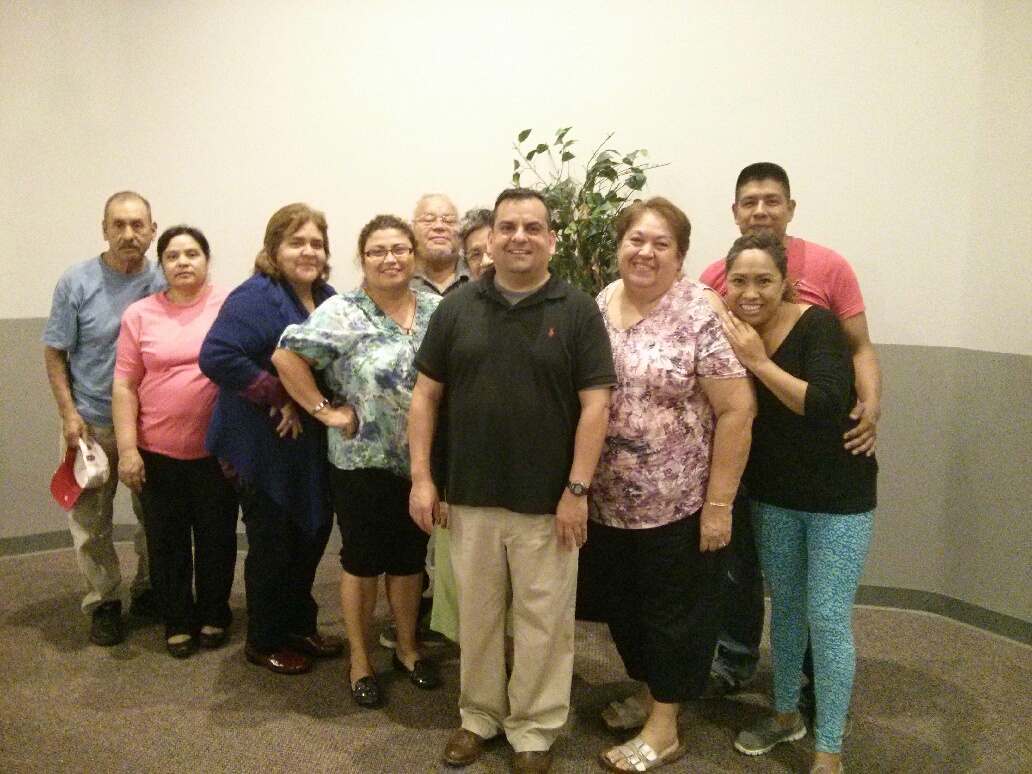
Fr. Chava Gonzalez, OMI of the Shrine of Our Lady of the Snows in Belleviile, IL (front) with his study group.
Vatican Radio interview Oblate representative at UN about Laudato Si’ July 31st, 2015
T![image001[2]](http://omiusajpic.org/wp-content/uploads/2008/02/image0012.jpg) he Vatican Radio has interviewed Fr. Daniel LeBlanc OMI,Missionary Oblates General Administration representative to the United Nations and VIVAT in New York about the impact of Pope Francis Encyclical Laudato Si’ on United Nations deliberations.
he Vatican Radio has interviewed Fr. Daniel LeBlanc OMI,Missionary Oblates General Administration representative to the United Nations and VIVAT in New York about the impact of Pope Francis Encyclical Laudato Si’ on United Nations deliberations.
Listen to Fr Daniel interview here
Catholic Sisters Release “Earth as our Home” Booklet August 11th, 2014
 Too often when we hear the word ‘house’ we only think of a physical building and its rooms. But what if we began to think of Earth as our house – with various rooms – what would we need to do to make this ‘house’ a true ‘home?’ The Catholic Sisters for a Healthy Earth have prepared a reflection booklet on the various rooms of a house, placing each room and its activities into the broader context of our Earth-home.
Catholic Sisters for a Healthy Earth is made up of representatives from congregations of women religious from the upper Mississippi Valley in eastern Iowa and southwestern Wisconsin. The group’s coordinator, Joy Peterson, PBVM explains, “Our intention is to take a new look at how everything we do, no matter where we are, is interconnected and tied to the well-being of all living things.” The booklet includes suggestions of simple actions for families to take in order to live more sustainably and walk more gently on Earth.
You can get a free download of the booklet at the Sisters of St. Francis website.
The Oblate Garden In Washington Enters its Third Year April 7th, 2014
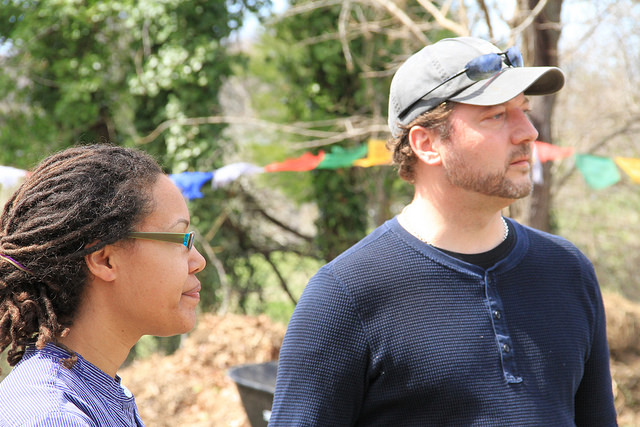
Gail Taylor, farmer at the 391 garden, and David Grosso, At-Large Member of the Washington, DC Council at the April 5th opening of the garden.
Supporters of the vegetable garden at the Oblate House in Washington, DC met on April 5th to mark the start of the third season of planting. The lead gardeners, Gail Taylor and Zachari Curtis, came together with volunteers, neighbors, supporters of urban gardening in DC, members of the local oblate community and DC Councilman David Grosso. Also in attendance were: Black Belt Justice Center, DC Greens, Green Girls Go, Dreaming Out Loud, the Green Scheme, Damien Ministries.
The project was initiated three years ago with the support of the local oblate community and the province administration, and has delivered a variety of rich and wholesome vegetables in the first two years of operation. The land previously was used primarily for recreational purposes, and the farmers have worked hard to improve the soil quality so it can be used for farming.
The project is one of a number of neighborhood vegetable initiatives established by people committed to producing food for people in the city, particularly for underserved neighborhoods.
Councilman David Grosso has introduced the DC Urban Farming and Food Security Act to make more urban vegetable gardening initiatives possible. This legislation will provide access to city lots and tax incentives designed to make the business model more attractive to entrepreneurs, with the result that healthy, locally grown vegetables would be more accessible to District residents. All of the groups attending the April 15th event are committed to mobilizing support for the legislation.
