

News Archives » Social Justice
Faith Groups Oppose Colombia Free Trade Agreement April 19th, 2011

Protest against U.S.-Colombia FTA in Washington, DC, June 2009
As a presidential candidate in 2008, Barack Obama said that he would oppose the U.S.-Colombia Free Trade Agreement unless human rights conditions in that country were improved. Three years later, Colombia still faces deeply troubling levels of violence, displacement, and poverty. Colombia has over 5 million displaced people – more than any other country in the world. Trade unionists and human rights workers face constant threats. Extractive industry projects violently push indigenous and Afro-Colombian communities off of their lands.
Despite all of this, the Obama administration recently announced that it is prepared to submit the Colombia FTA to Congress for approval anyway. A new agreement was reached with the Colombian government to make some improvements on labor conditions, but this plan does not go far enough, and it fails to address broader human rights concerns. Moreover, agricultural provisions in the FTA will undermine the livelihoods of small-scale farmers, pushing more people into poverty and deepening the instability that drives Colombia’s violent conflict.
The Oblate JPIC Office joined other faith groups in asking Congress to oppose passage of the Colombia FTA unless these important issues are addressed.
Read the letter from religious organizations here…
Video on Bangladeshi Khasi and Garo Peoples Now on YouTube April 12th, 2011

Sylhet area, Bangladesh
The Oblate JPIC office is excited to introduce the video, “Behind the Green,” to the Missionary Oblates JPIC YouTube Channel.
The film “Behind the Green” (Parts 1-3) is based on the historic struggle of the Khasi and Garo peoples for protection of their ancestral homeland in Bangladesh in the face of Government plans to establish an Eco-park in the Moulvibazar district. The eco-park would take up more than 1500 acres of the indigenous peoples’ land for tourism.
The films also features Fr. Joseph Gomes OMI, a missionary catholic priest working amongst the Garo and Khasi people in Bangladesh.
View the “Behind the Green” video at: http://www.youtube.com/user/OMIJPIC
Please bookmark this JPIC Youtube Channel website and check it frequently as it will be updated with stories and actions from Oblates in ministry. Spread the word!!
Oblate JPIC Committee Meets in Godfrey, IL April 12th, 2011
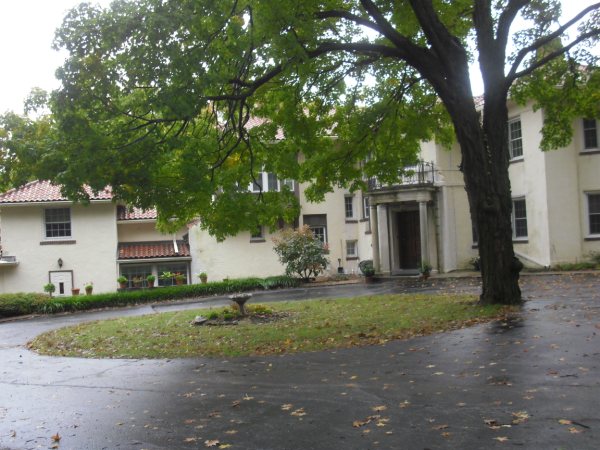 Oblate JPIC staff and members of the U.S. Oblate Province Justice and Peace Committee met in Godfrey, Illinois, April 6-8 for the 2011 spring meeting to discuss the progress made on justice and peace issues. The purpose of the meeting was to share updates on the work of the JPIC staff and committee members and strategize on issues of importance to the JPIC initiative.
Issues discussed included work on housing foreclosures in San Fernando, a report on ICCR-related work on access to water and access to medicines, the Oblate Ecological Initiative, updates on Immigration reform and the death penalty, efforts to stem the flow of human trafficking and the experience of the 2011 World Social Forum held in Senegal. The Oblate JPIC committee meeting provides an opportunity to strategize on the issues as well as to connect with the local Oblate community where the meeting is held. During this particular meeting, Oblate novices and their staff – who provided wonderful hospitality to the participants – joined the morning session.
Haitian Immigrant Deportations Should Be Halted April 1st, 2011
 The Department of Homeland Security (DHS) has resumed deportations to Haiti, a development about which we are deeply concerned. Deportations place an unnecessary burden on Haiti, which is still struggling to recover from the devastating earthquake of January 2010. Reconstruction continues in the country, but at a very slow pace, with hundreds of thousands of people still living in tent cities. What is worse is that Haiti’s jails, where the Haitian government usually holds deportees, are notorious for their inhumane treatment of detainees.
Deportations from the U.S. to Haiti had been halted on humanitarian grounds when the earthquake devastated Haiti. On January 20, 2011, the U.S. resumed deportations to Haiti, deporting an estimated 27 people of Haitian origin with criminal records. One has died already in prison from cholera-like symptoms.
The United States Conference of Catholic Bishops (USCCB) Committee on Migration has expressed deep opposition to the recent resumption of deportations, citing the slow recovery from the earthquake, the recent outbreak of cholera, and concern that this would communicate the wrong message to the Haitian people, who are depending upon the United States for long-term support in their effort to recover from the earthquake.
Mandate for Special Rapporteur on Water and Sanitation Adopted by UN HR Council March 25th, 2011

Winnemem Wintu Chief and Spiritual Leader Caleen Sisk-Franco discusses her village's sewer system with the U.N. Independent Expert Catarina de Albuquerque.
The UN Human Rights Council passed a resolution this morning extending the mandate on the human right to safe water and sanitation for another three years, and changing the powers of the Independent Expert to that of a special rapporteur.
This is good news. The mandate will continue with Catarina de Albuquerque in the position of Special Rapporteur. In this position, she will have enhanced powers: in addition to assisting governments to define the scope and content of the rights, she can engage with governments about complaints from affected individuals, communities, and civil society organizations on issues related to and possible violations of the human right to safe drinking water and sanitation.
Furthermore, the resolution explicitly states the full list of criteria for the human rights to water and sanitation. These are listed below:
Click here to read more »
