

News Archives » fr seamus finn omi
Investment Professionals Convene at Marquette University to Discuss Socially Responsible Investing October 10th, 2019
Originally Published by The Center for Peacemaking at Marquette University
Rev. Séamus Finn, OMI, was the keynote speaker at Marquette’s first symposium on Socially Responsible Investing. Finn’s keynote explored the history of socially responsible investing, drawing on personal stories from his background and work as board chair of the Interfaith Center on Corporate Responsibility (ICCR).
The event also sparked fruitful knowledge sharing and networking among Marquette students and faculty, and Milwaukee investment professionals. A wide-ranging panel discussion examined a variety of strategies and challenges on the minds of socially responsible investing practitioners and advocates.
Talk of socially responsible investing permeated campus as Finn guest lectured in Theology and Finance classes during his three-day visit to campus.
Socially Responsible Investing from the 1970’s to today

Rev. Finn meets with students in Marquette’s AIM Program
Finn noted two events as the genesis of the modern movement toward socially responsible investing: apartheid in South Africa and the use of chemical weapons in Vietnam. Shareholder advocacy was the method the ICCR used to combat these injustices. In each of these cases, shareholders demonstrated the ability to influence companies such as General Motors, Ford, and various legacy banks for their role fueling apartheid in South Africa, and Dow Chemical for manufacturing Napalm and Agent Orange used in Vietnam.
Since then, the ICCR has engaged with numerous corporations to improve human rights, food safety and sustainability, environmental health, water safety and sustainability, financial services, and global and domestic health. Though ICCR is not an exclusively Catholic organization, the influence of Catholic Social Teaching (CST) is evident in these priorities. Finn singled out the USCCB’s 1986 Pastoral Letter on Catholic Social Teaching and the U.S. Economy titled “Economic Justice for All.”
So, how does ICCR do this? Through a variety of forms of shareholder advocacy, including stockholder resolutions, voting proxies, corporate dialogues, and other strategies.
Some tools Finn offered for promoting socially responsible investing are positive and negative screening, international norms-based screening, proxy voting, integration of environmental, societal, and governmental (ESG) factors, sustainability themed investing, and impact/community investing.
Contemporary issues in Socially Responsible Investing
Finn shared what he sees as some of the most important issues among socially responsible investors today:
- Climate change
- Private prisons
- Access to firearms
- Opioid addiction
- Artificial intelligence and robotics
 These are not only concerns within the financial/corporate sector, Finn noted, they are a result of societal concern and shareholder interest. Furthermore, he noted that public interest in climate change is unique in that its impact reaches across all sectors.
Finn concluded his remarks with a poignant statement on what is at stake across all of the issues socially responsible investing targets.Despite the unprecedented standard of living present for most people in the United States, Finn cautioned against simply accepting the United States as a “promised land of political freedom and economic opportunities.” It’s imperative to remember the cost of this, Finn said, as we must recall with a sober humility the bloodshed that has contributed to the prosperity we enjoy today.
The importance of recognizing those who have suffered and working to prevent future suffering is integral to participating in SRI and to promoting peace through the business sector.
Socially Responsible Investing Panel

Rev. Finn meets with a Marquette theology class
Following Finn’s speech, the symposium transitioned into a panel of professionals from the Milwaukee area. The panel was moderated by Christopher Merker, an adjunct professor of finance at Marquette who teaches a course on sustainable finance. The panelists were Laura Gough (Baird — Investment Consulting), Nadelle Grossman (Marquette University — Law & Governance), Joe Henzlik (ISS — Sustainability & Governance), Leo Harmon (Mesirow Financial — Asset Management), and Conner Darrow (Marquette University — AIM Student).
They discussed a variety of topics including:
- Individual definitions of SRI
- Screening and the importance of ESG in SRI
- Thoughts on the Business Roundtable
- Fiduciary law and obligations
- Driving forces in SRI
- Using SRI in small/mid-cap funds
- Trends in shareholder engagement
- Linking pay to ESG results
- Fossil fuel divestment
- Actionable ideas to implement SRI
The event concluded with a reception, where the attendees, panelists, and keynote speakers continued to discuss SRI and the variety of implications that it has in the promotion of peace and justice on a local, national, and international level.
The Socially Responsible Investing Symposium was organized by the Center for Peacemaking, College of Business Administration, and Finance Department. The event was sponsored by Baird, CFA Society Milwaukee, Mesirow Financial, Sage Advisory, and Federated Investors.
Two Days in Geneva with Fr. Séamus Finn, OMI February 2nd, 2017
“Pondering the stark contrast in perspectives, messaging, ambition, dreams, reading of history and the current state of the international relations in a place that is filled with history”
My two day visit to Geneva paralleled the two first full days of the Trump administration in Washington. The experience became like a retreat that at once brought me into contact with so many of the people, institutions and ideas that have formed and sustained the international multilateral system against the background of threats to repeal and disrupt many of the agreements and practices that are the threads that have been knit together into the tapestry of international cohesion and cooperation. It is like no other city, I think, in terms of the numbers of people and governments that have gathered here to negotiate peace, to sign agreements and treaties and to repair again the ruptures and wounds that have often divided tribes and counties and regions.
I participated in a multi stakeholder session on improving access to medicines for the treatment of neglected diseases at the Institute of International Development Studies that brought together a very diverse international set of researchers, pharmaceutical companies, governments, development agencies, NGOs and investors. They came together to evaluate the progress that has been made through this collaborative process, to discuss new concepts and initiatives that were being considered and to explore avenues whereby the success of these efforts might be enhanced through this open collaborative platform.
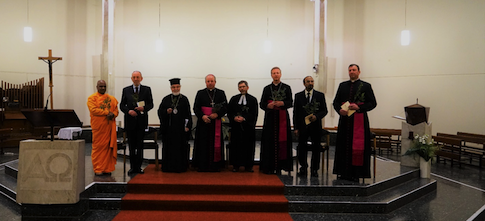
In the evening I gathered with many others at the church of St. Nicolas de Flüe for an interfaith prayer service to mark the World Day of Peace that was sponsored by the Permanent Observer of the Holy See to the United Nations in Geneva. This marked the 50th anniversary of the World Day of Peace that was initiated by Pope Paul VI in 1967 and focused this year on the theme of “Non Violence: A style of politics for peace”. One by one the representatives of different faith traditions, Islam, Jewish, Buddhist, Orthodox, Protestant and Catholic, offered their reflection on this year’s message from Pope Francis and prayers were offered in six different languages. Choirs from Africa and the Philippines as well as a Vietnamese style prayer procession added to the offering.
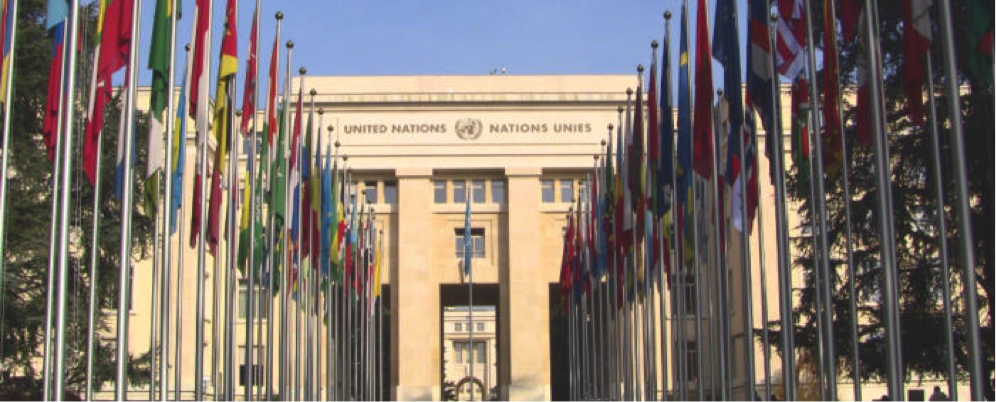
On the second day I made my way to the UN headquarters in Geneva to participate in an event that was sponsored by religious, secular and government organizations to recognize the contributions of a 15th century Dominican friar to the foundation of International Law and to the principles and process that would eventually lead to the establishment of the League of Nations and the United Nations. On the occasion of the conclusion of the celebration of the 800th anniversary of the Dominican friars, the Master general of the congregation as well as a number of UN officials and government representatives joined a large number of invitees in the Council Chamber that is now home to the conference on Disarmament and bear the name of Francisco de Vitoria, OP.
As I left the Council Chamber and headed toward the exit of the UN grounds I walked down the avenue and alongside the rows of country flags that were being occasionally disturbed by a gentle breeze on this chilly night. I found myself pondering both the discussions and yes compromises and the leaders that had contributed to the establishment of the League of Nations and then United Nations and the origins of the numerous international institutions and organizations that exist today. What was their dream, their founding vision and their guiding mission? What issues, problems and challenges were they hoping to address or solve? What inspiration, courage or dedication informed the numerous individuals from all over the world who contributed to this great work. As we surpass a world population of 7.5 billion and wrestle with the care of our fragile and beautiful common home, as Pope Francis reminded us, I wondered where and how we will find the wisdom and the architects to build the institutions and relationships that will be needed to hold our system together.
The inauguration of the Trump administration is offering in many ways a profound challenge to the vision of an international and global system that was rooted in the belief that a spirit of mutual trust and collaboration could be grounded in the principles of international law and governed by institutions that were based on those principles. Taking the country in some ways out of that web of international relationships and reducing one’s trust and commitment in the institutions that exist to promote harmony peacefully, resolve differences and provide a venue for public debate and cooperation appears reckless and lacking in foresight. At a minimum it is a significant divergence in direction and disruptive of the protocols that have been in place for decades.
At a time of significant disruption in our politics in the US and elsewhere we are left to look again to our foundations and to find direction and meaning and life in our vocation. The homilist at the local parish liturgy last Sunday carefully reminded us that in the Beatitudes we can find the Charter for living a Christian life and experience the grace filled presence of the Living God. May it be so!
Fr. Seamus Finn, OMI and Fr. Joseph Gomes, OMI at Indigenous forum January 19th, 2017
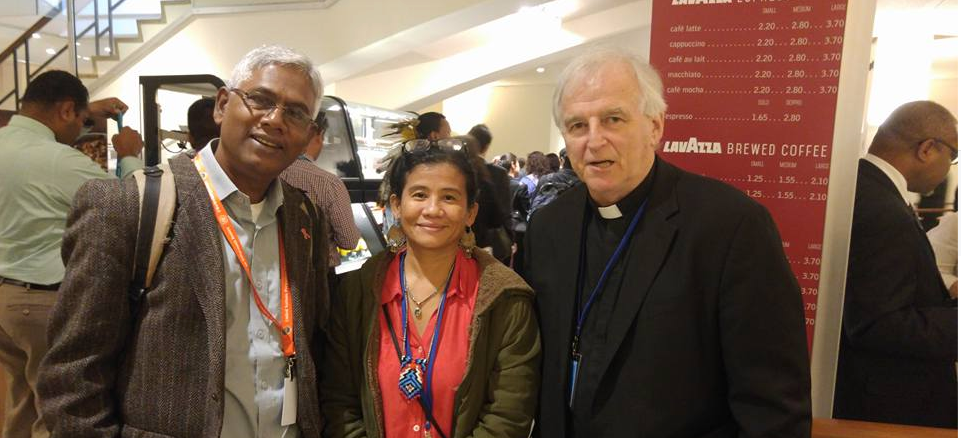
(Left) Fr. Joseph Gomes, OMI, (right) Fr. Seamus Finn, OMI, with a colleague at Indigenous forum
Read more about Oblate Ministry with Indigenous peoples.
Fr. Seamus Finn Comments on Wells Fargo’s Business Standards December 12th, 2016
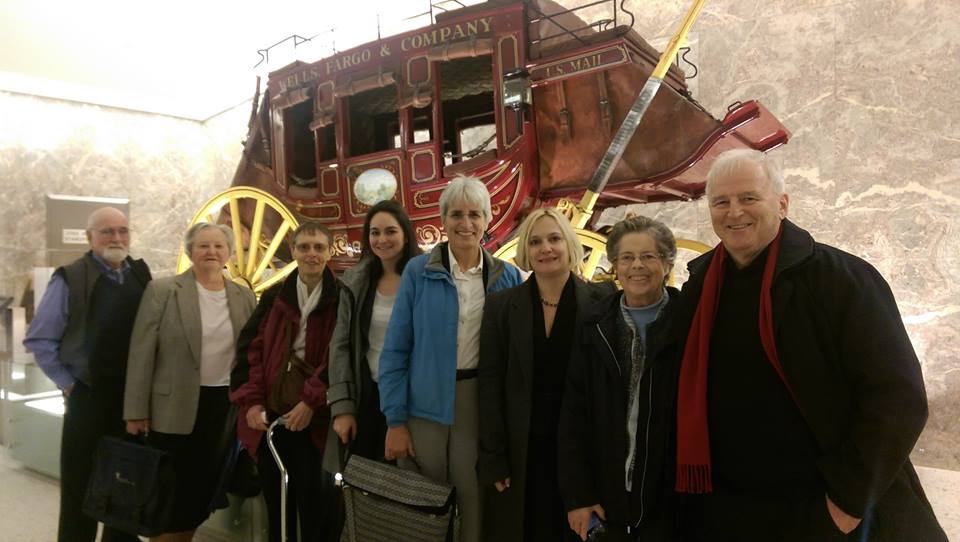
ICCR members continue to press Wells Fargo on addressing ethical dimensions of their vision and values statement and strengthening a culture that prioritizes true customer service and the common good as priorities.
Sr Nora Nash OSF and Fr Séamus Finn OMI speak to Business Ethics on what Wells Fargo needs to do. http://business-ethics.com/2016/12/10/where-wells-fargo-goes-from-here/
“Business Leaders as Agents of Economic and Social Inclusion” – Fr. Séamus Finn, OMI December 5th, 2016
The following is the text of opening remarks recently made by Fr. Séamus Finn, OMI at the UNIAPAC International Conference at the Vatican.
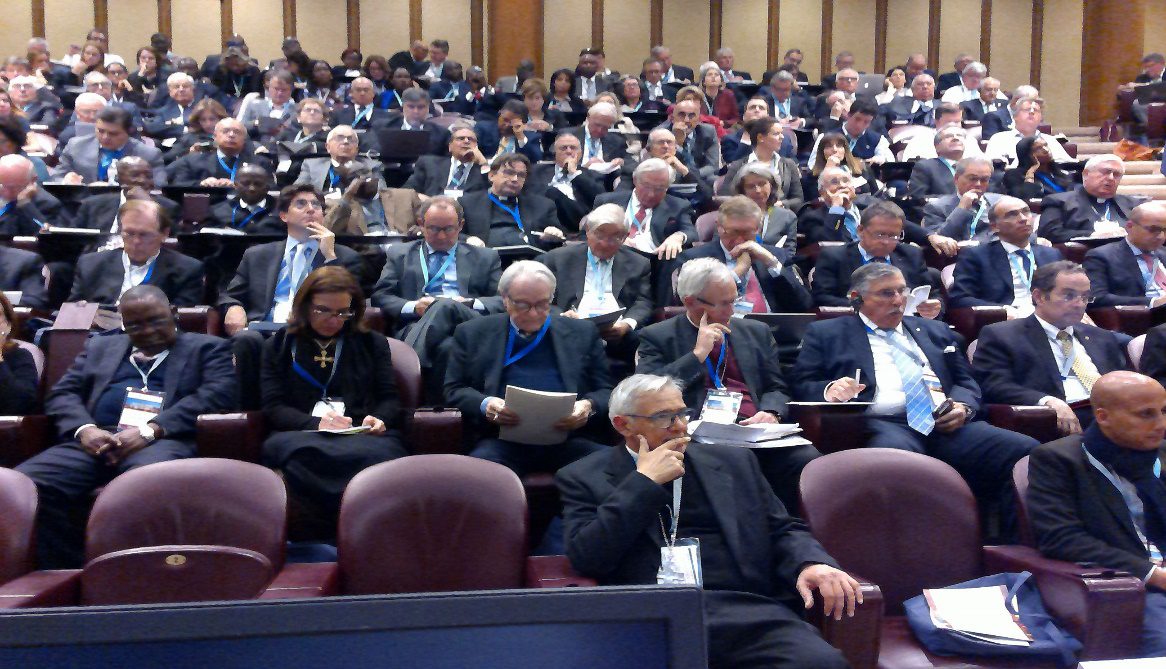
I will briefly explore two themes in the time that I have. First I want to offer some perspectives on the interaction of Catholic Social Teaching with the worlds of finance and commerce. Secondly I will offer a brief summary of the outcomes from two conferences on Impact Investing that were jointly sponsored by the Pontifical Council on Justice and Peace, Catholic Relief Services and the Mendoza College of Business at Notre Dame University in the USA.
CST, Finance and Commerce
CST has in its historical evolution presented a sustained consistent analysis, critique and affirmation of the various types of financial and commercial transactions that came into existence over the centuries.
These are human activities that have existed and evolved over millennium and therefore presented existential questions and challenges to the teachings and principles of the faith tradition. The actors, actions and themes that were being examined included the roles and responsibilities of owners and customers and buyers; borrowers and lenders; the obligations of debtors and the appropriateness of interest rates; the responsibility to the norms of justice and the call to charity that the faith demands.
In recent decades CST has been called and challenged to go into a deeper analysis of how the principles of CST, that we are all very familiar with, solidarity, subsidiarity, participation and care for creation etc. should be applied in the financial and commercial transactions and activities that are practiced today. Historically the debate in the tradition was often about the roles and responsibilities of the church in teaching and admonishing and of the state in governing and regulating the numerous issues and sectors that impacted society. Today the private sector as represented by civil society and corporations has come to occupy its rightful place at the table of debate and action about all the issues that societies encounter.
The confluence of some internal and external drivers have led to the emergence of this new multi stakeholder paradigm. Internally since the Second Vatican Council the church and the faithful have grown into a deeper awareness of themselves as actors in society and as contributors to the search for constructive responses to the challenges that societies face. In recent decades through the intervention of successive popes there has been a profound awakening in the church to the interdependent status that all creatures share in a finite planet. Finally Pope Francis in the apostolic exhortation Evangelii Gaudium and the encyclical Laudato Sí has reiterated the teaching of the tradition and stated in 2013 that there is a need “to allow gospel principles to permeate the Church’s financial and economic activities, too”. This is consistent with the call of the council in Gaudium et Spes and with the explicit challenge offered by Justice in the World in 1971(no. 40); “ While the Church is bound to give witness to justice, she recognizes that anyone who ventures to speak to people about justice must first be just in their eyes. Hence we must undertake an examination of the modes of acting and of the possessions and life style found within the Church herself.”
Externally the unfolding process of globalization has left its mark everywhere. Led by the financial sector’s global expansion and the integration of the financial system it has had a profound impact on political alliances, civil society, the growth and penetration of corporations and the extension of social movements. The technological innovations that have facilitated much of globalization’s reach and inclusion is pervasive in even the remotest regions of the planet.
Impact Investing
The two conferences on Impact Investing that were jointly sponsored with the Pontifical Council in 2014 & 2016 broke new ground in the church’s engagement with capitalism and went beyond the conventional approaches to socially responsible investing and corporate social responsibility. In many ways they were an effort to respond to the well-publicized critiques of capitalism that Pope Francis has offered and his call for a financial system that is inclusive, that cares for the environment and takes seriously our responsibility to future generations. These conferences demonstrated how impact investing was consistent with CST, how individual and institutional investors were working to align the deployment of their assets to support positive social and environmental impacts and to consider the tools and approaches that were needed to achieve those objectives.
They brought together development agencies from the private and official sector as well as foundations and representatives of international financial institutions. They also gathered representatives of projects and initiatives that were looking for reliable sources of patient appropriate capital that is committed to achieving financial, social and environmental returns. Both of these events, were I think, consistent with the traditional role that the church has played when it seeks to create a space where new initiatives that show promise in responding to the evolving needs of communities can be incubated.
Capitalism 2.0
It is within this context that Pope Francis is inviting all of us to participate in the promotion of a Capitalism 2.0 that leaves behind the approaches and activities that fail to take into account the negative social and environmental consequences of their actions and whose only priority is profit and power. This is consistent with the earlier efforts to promote credit unions and cooperatives that CST supported. The institutions and companies in a Capitalism 2.0 must be willing to ask difficult questions such as: What & How is your activity, product or service contributing to the common good? Investors, also, starting with those who seek to invest in a manner that is consistent with their faith and therefore CST must ask; where does your money sleep? And while you are sleeping what is your money being used to finance? In a Capitalism envisioned by CST and Pope Francis we might further ask; what kinds of banks, companies, investors and institutions do we need in CAP 2? What kinds of regulations and supervision and transparency do we need across all the multiple jurisdictions that are responsible for assuring the stability and liquidity of the financial system and the reliability of the major institutions that operate in the system.
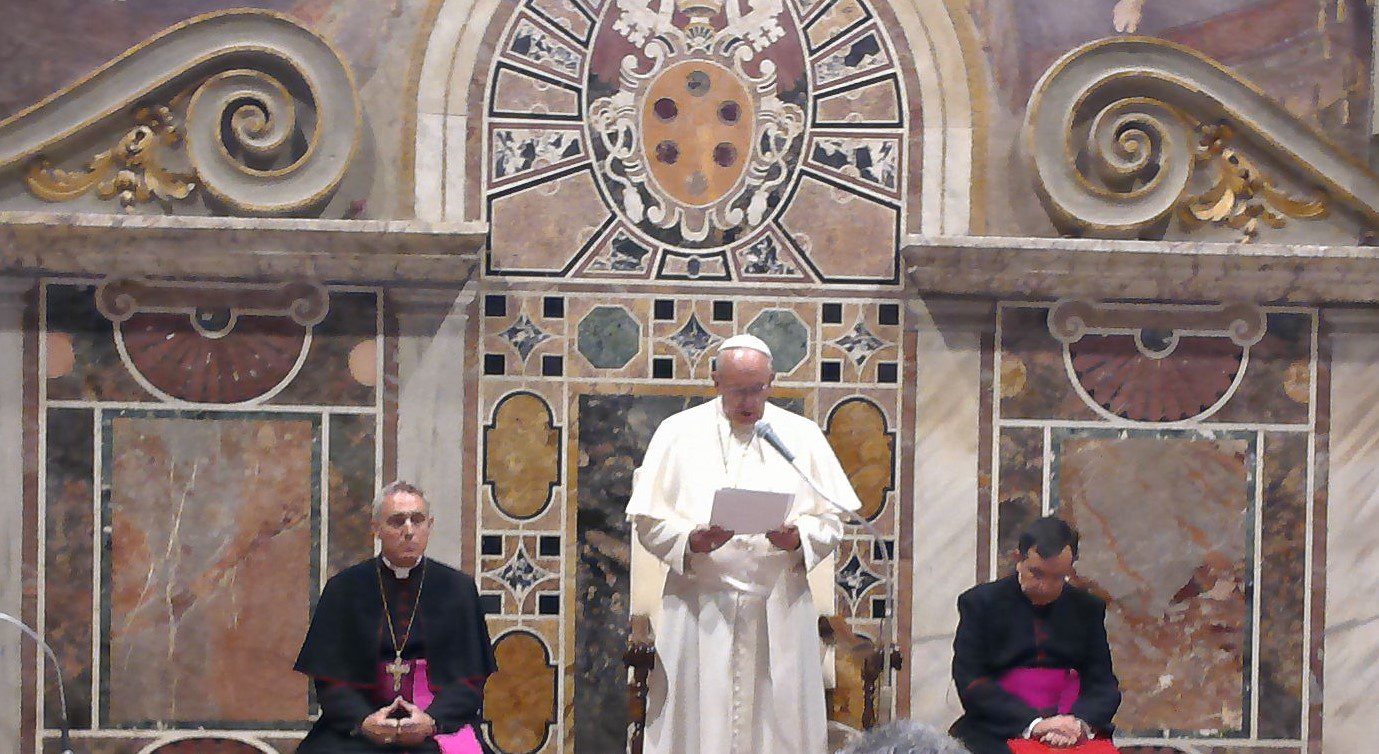
Consistent with Faith and with the tradition
As we seek to better align our business operations and our financial transactions with CST we are being invited to consider how we are positively contributing value all along our operations and for the investors where and what do we want to invest in. The global impact investing network has identified 10 areas like sustainable agriculture, affordable and accessible housing and healthcare and clean technology that are easily identifiable but all business operations have impacts. In seeking to decrease the negative social and environmental impacts that they cause and increase their positive contributions business leaders in all sectors can be agents of economic and social inclusion and embrace the ecological dimensional their vocation to care for our common home.
