

News Archives » About
Bejoy Nicephorus D’Cruze newly installed as Oblate Bishop of Sylhet October 3rd, 2011
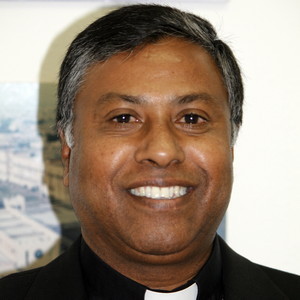 Oblate Bishop Bejoy D’Cruze was installed on September 30, 2011 as Bishop of the newly formed Diocese of Sylhet. This is the country’s 7th diocese, which was created on July 8th.
The new diocese has seven parishes and 11 mission centers with about 17,000 mostly tribal Catholics, served by 21 priests and 33 Religious. Bishop D’Cruze had served ably as Bishop of Khulna before his appointment to the new diocese.
Sylhet has been a locus of JPIC work in Bangladesh, with Oblate support for efforts against illegal logging and in support of land and other rights of the indigenous Khasis and Garo peoples.
Mary Immaculate Environmental Activists Press On September 29th, 2011
 Environmental justice advocates in the Oblates parish of Mary Immaculate in Pacoima, CA are working on materials to educate people about how the toxics being released into the air from a local asphalt plant affect their health. They are asking people to call the state regulator – South Coast Air Quality Management – with a complaint whenever they smell the bad odor associated with hot asphalt. A total of at least eight calls are required to trigger a response from the office.
Notice to the Pacoima community: Please ask and write down the person you spoke with at the South Coast Air Quality Management office and get their employee number. If you are not able to call right when you smell something, write down the time or try to remember the approximate time and report it as soon as possible. If you smell this everyday, please call everyday once a day. The number is 800-288-7664. Your call can make a difference! We thank the people that have already called, please keep calling whenever you get the smell.
Oblates Celebrate ICCR’s 40th Anniversary! September 29th, 2011

The group representing the Oblates at the ICCR 40th Anniversary event held in New York on September 22, 2011 from left to right are: Anne Van Dyke; Andrew Small, OMI; George Ngolwe; Seamus Finn, OMI; Christina Herman; Mary O'Herron; Daniel LeBlanc, OMI.
The Interfaith Center on Corporate Responsibility celebrates its 40th Anniversary this year. The Oblate JPIC staff, which is deeply engaged in the work of faith-based shareholder advocacy, joined in the celebration which followed a week of strategizing on issues as diverse as human trafficking, immigration, mining, responsible finance, water and access to medicines.
“Values in Finance: Are we ready to learn the lessons?” September 27th, 2011
 In a talk given at Trinity College, Dublin on the 15th Anniversary of Clann Credo – The Social Investment Fund, Fr. Seamus Finn, OMI talked about the need for the faith community to engage with business on questions of ethics and to work for more sustainable practices and institutions. He made three main points:
- Faith communities and traditions need to re-engage in the discussion of purpose and operations of the financial systems and their priorities.
- The damage that has been done to the people and the environment for the sake of fat profits and in the name of “progress’ has been tremendous and needs to ne examined.
- Religious communities, institutions and believers have always been willing to dream, innovate and risk new initiatives for the promotion of the common good.
Fr. Finn is active in faith responsible investing through the Interfaith Center on Corporate Responsibility where he serves on the Board, and in 3iG, an international, interfaith coalition of institutional investors.
Faith Groups urge Congress to Protect the Poor from Foreign Aid budget Cuts September 26th, 2011
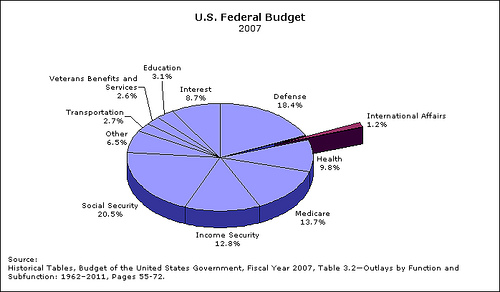
A broadly ecumenical group of faith organizations has urged Congress to preserve humanitarian and poverty-focused foreign assistance and civilian diplomacy from further cuts as they implement the Budget Control Act of 2011.
The groups, which include the Missionary Oblates, argued in the letter that: “Deep cuts to humanitarian and poverty-focused foreign assistance, which totals only one percent of the federal budget, will not make a significant contribution to deficit reduction. But it could cost millions of lives, undermine global human security and harm U.S. and global interests in helping build a more stable and secure world for all people.”
