

News Archives » Pope Leo XIV
The Human Embryo Created by God is Sacred October 29th, 2026
(Contributed by: Bishop Michael Pfeifer, OMI)

Wise Builders: A Prayer with Magnifica Humanitas October 14th, 2026
Called to Live the Magnificent Humanitas Oblata June 3rd, 2026

On May 25th, Pope Leo XIV presented his encyclical Magnifica Humanitas, which addresses the safeguarding of the human person in the age of artificial intelligence. Just a day later, the U.S. Provincial shared an article he had written, offering an oblate reading of this encyclical and highlighting our missionary challenges within the context of his Province.
For the next three days leading up to Friday, I attended the Union of Superiors General meeting in Rome. The theme was “Guardians and Transmitters of the Charism in the Service of Leadership.” One phrase in particular has stayed with me and sums up beautifully the whole gathering: Every new generation of religious is responsible for regenerating the charism in its own time. To regenerate it means drawing from the gift of the Holy Spirit and grounding it within the modern context in which we live.
In our Constitution 168, each of us is called to renew and generate our charism through our oblation with a spirit of creative fidelity. This requires a vital, living reception of our Constitution’s rules and traditions, not simply repeating them as a matter of form but truly embodying the charism in the concrete reality of our daily lives. Constitution Number 1 reminds us that, from within the Church, we listen to humanity’s deepest needs for salvation. Pope Leo has spoken out, shedding light on these urgent needs of our modern world. Now it is up to us to respond to the lens of our unique charism: reflecting, acting, and perhaps writing our own Magnifica Humanitas Oblata. How beautiful it would be if we could share our experiences and reflections with one another.
Luis Ignacio ROIS ALONSO, OMI
Superior General
VISIT: OMIWORLD.ORG
Advancing the Legacy of Pope Leo XIII: A Call to Action for Catholic Investors August 5th, 2025
By: Christopher Cox, Seventh Generation Interfaith Coalition for Responsible Investment
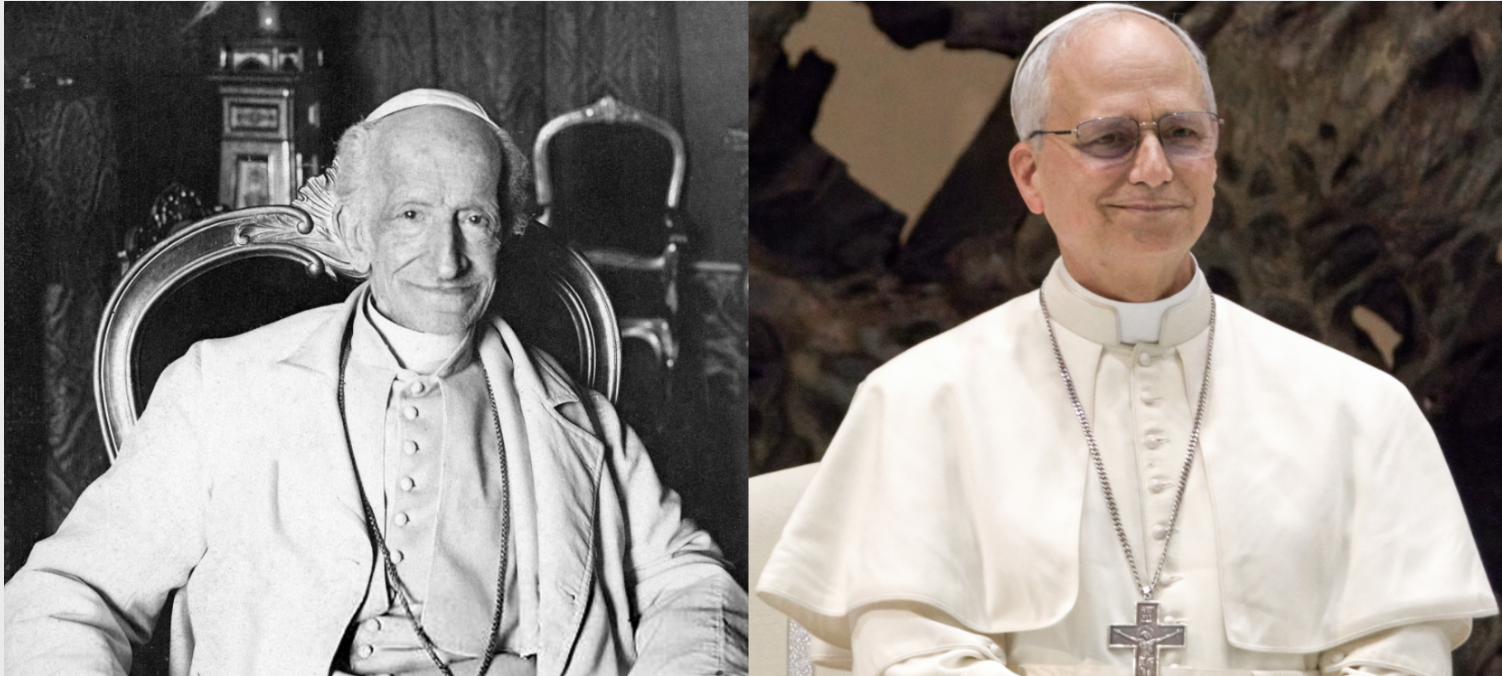
In 1891, Pope Leo XIII issued Rerum Novarum, the landmark encyclical that laid the cornerstone of modern Catholic Social Teaching. More than a century later, its principles—fair wages, safe conditions, and the right to organize—remain vital. Today, Catholic investors face a renewed moral imperative to uphold these values in a rapidly changing economy.
A New Pope Leo for a New Industrial Revolution
When Pope Leo XIV chose his papal name at his election in May, he signaled a renewed commitment to defend human dignity in the face of new threats and opportunities. In his address to the College of Cardinals, he said:
“Sensing myself called to continue in this same path, I chose to take the name Leo XIV. There are different reasons for this, but mainly because Pope Leo XIII in his historic Encyclical Rerum Novarum addressed the social question in the context of the first great industrial revolution. In our own day, the Church offers to everyone the treasury of her social teaching in response to another industrial revolution and to developments in the field of artificial intelligence that pose new challenges for the defense of human dignity, justice and labor.”
