

News Archives » Economic Justice
Financial Transparency Coalition Meets in Africa on Problem of Illicit Financial Flows September 30th, 2013
 The new Financial Transparency Coalition is meeting in Dar es Salaam, Tanzania on October 1-2. The theme for the conference, is “Towards Transparency: Making the Global Financial System Work for Development.” Fr. Seamus Finn, OMI, US JPIC Office Director, is officially representing ICCR (Interfaith Center on Corporate Responsibility) at the conference.
Nearly a trillion dollars a year has been secreted out of developing countries, robbing them of revenue needed desperately for development. The coalition was formed to do something about this problem that is central to the development of poor countries. According to the Coalition, half of the illicit financial flows – a staggering $500 billion – is coming from Africa. Flowing from crime, corruption, and tax evasion, these illicit transfers represent a drain on developing economies that is equivalent to eight times the size of global foreign aid.
The US JPIC Office is involved in several inter-connected organizations in Washington, DC, working for greater financial justice and transparency. These include the Tax Justice Network USA, (where Fr. Finn serves on the Board), and the FACT coalition (Financial Accountability and Corporate Transparency Campaign). The international Financial Transparency Coalition was launched in May of 2013, in response to the growing awareness and activism around the problem of illicit financial flows.
50th Anniversary of the March on Washington August 21st, 2013
 On August 28, 2013 citizens from across the United States will converge on Washington to commemorate and celebrate the historic March On Washington that took place 50 years ago on August 28, 1963.
Following the March for Jobs and Justice, President Obama will speak to the nation from the steps of the Lincoln Memorial, the same spot from which Dr. Martin Luther King issued his famous “I had a dream” speech. The Lincoln Memorial Commemoration activities are designed to commemorate and continue the pressure for civil rights and economic justice pursued by Dr. King and civil rights advocates 50 years ago. Information for the celebration can be found on the 50th Anniversary March on Washington website.
We invite your reflections on this historic day. Were you present at the March in 1963? We are collecting stories from people who were there to march for jobs and freedom. Send your recollections and reflections to jpic@omiusa.org in the JPIC Office and we will post them to the website.
Norway Conducts First Creditor Debt Audit August 20th, 2013
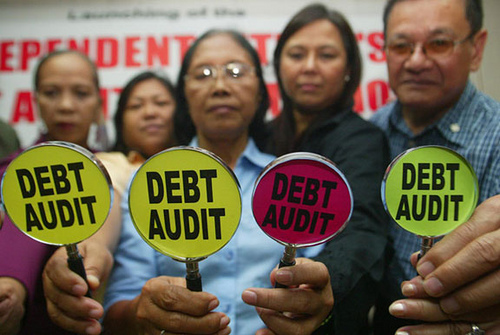 August 15 was an historic day for international debt justice. The Norwegian government launched the world’s first audit commissioned by a creditor, which evaluated the debt that developing countries owe to Norway. The report found that four of the 34 contracts were not in line with the UN Principles for Promoting Responsible Sovereign Lending and Borrowing from the UN Conference for Trade and Development (the UNCTAD Principles).
Regulators Warned Against Allowing Abusive Payday Lending March 22nd, 2013
 The Oblate JPIC Office joined nearly three hundred national organizations, state and local organizations, and concerned individuals in a letter against payday lending abusers organized by the Center for Responsible Lending.
According to the letter, “Direct deposit “advance” loans offered by a handful of banks, including Wells Fargo, US Bank, Fifth Third, Regions, Bank of Oklahoma and its related banking divisions, and Guaranty Bank, are structured and function just like loans from payday loan stores – carrying a high-cost combined with a short-term balloon repayment. Research has long shown that payday loans trap borrowers in a cycle of expensive long-term debt, causing serious financial harm to borrowers, including increased likelihood of bankruptcy, paying credit card debts and other bills late, delayed medical care, and loss of basic banking privileges because of repeated overdrafts. Payday lending has a particularly adverse impact on African Americans and Latinos, as a disproportionate share of payday borrowers come from communities of color. High cost, short-term balloon repayments, and the consequent series of repeat loans, have long been identified by regulators as features of predatory lending.
Read the letter… (Download PDF)
Spiritual Grounding for Economics April 1st, 2012

Father Marcelo Barros, OSB
We would like to share a very interesting article on economics (translated from the Portugese) by Father Marcelo Barros, OSB, Brazilian writer and theologian. The article examines the concept of a spiritual economy and the importance of linking human needs and aspirations with the basic rationale of any economy:
“As in all fields of life and human activity, spirituality must give a soul to the economy. Without the spirit, the economy lets itself dominate the market as an idol. And money transforms itself into a fetish. The market, that in itself is a human institution of interchange and of relations between persons and between groups, has become an absolute and disconnected from the rest. To such a point that we could denounce with Jesus: “the market was made for human beings and not human beings for the market”. In the last decades of the twentieth century, the economy became more than ever centered in money and in capital titles, with authoritarian neoliberalism and predominance (arrogance).”Learn more (Download PDF of the article)
Fr. Barros was ordained to the priesthood in 1969 by Dom Helder Camara , and for nearly ten years, from 1967 to 1976 , served as secretary and adviser to Dom Helder for ecumenical affairs. He is the author of at least six books, and has been an active member of the Ecumenical Association of Third World Theologians (EATWOT).
