

News Archives » faith consistent investing
A Reunion of Friends @ the Faith in the Common Good Conference, Paris, France April 20th, 2026
There was a reunion at the recent “Faith in the Common Good” conference in Paris, France with some of the team responsible for preparing Mensuram Bonam (a document that provides a framework for Catholic faith-consistent investing).
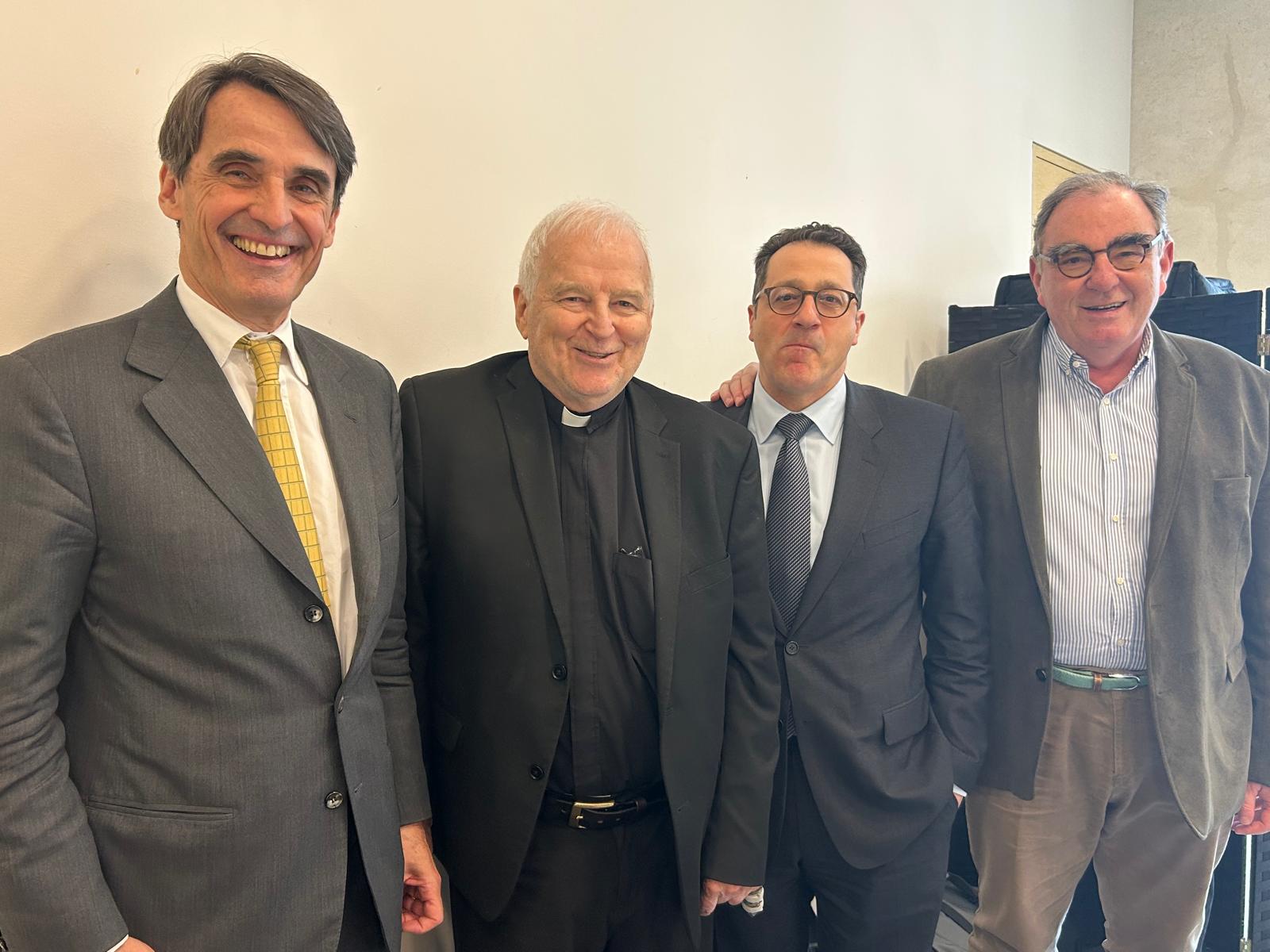
(Pictured L to R) Jean Baptiste de Frannsu, Vatican Bank; Rev Séamus Finn OMI; Paolo Camaletto, Archdiocese of Westminster and Antoine de Salin, French financial executive
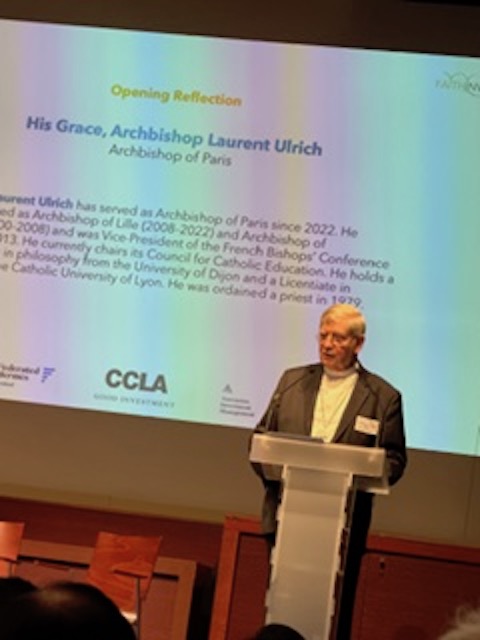
Fr. Séamus Finn, OMI Among Speakers @ Faith in the Common Good Conference, Paris, France April 20th, 2026
 |
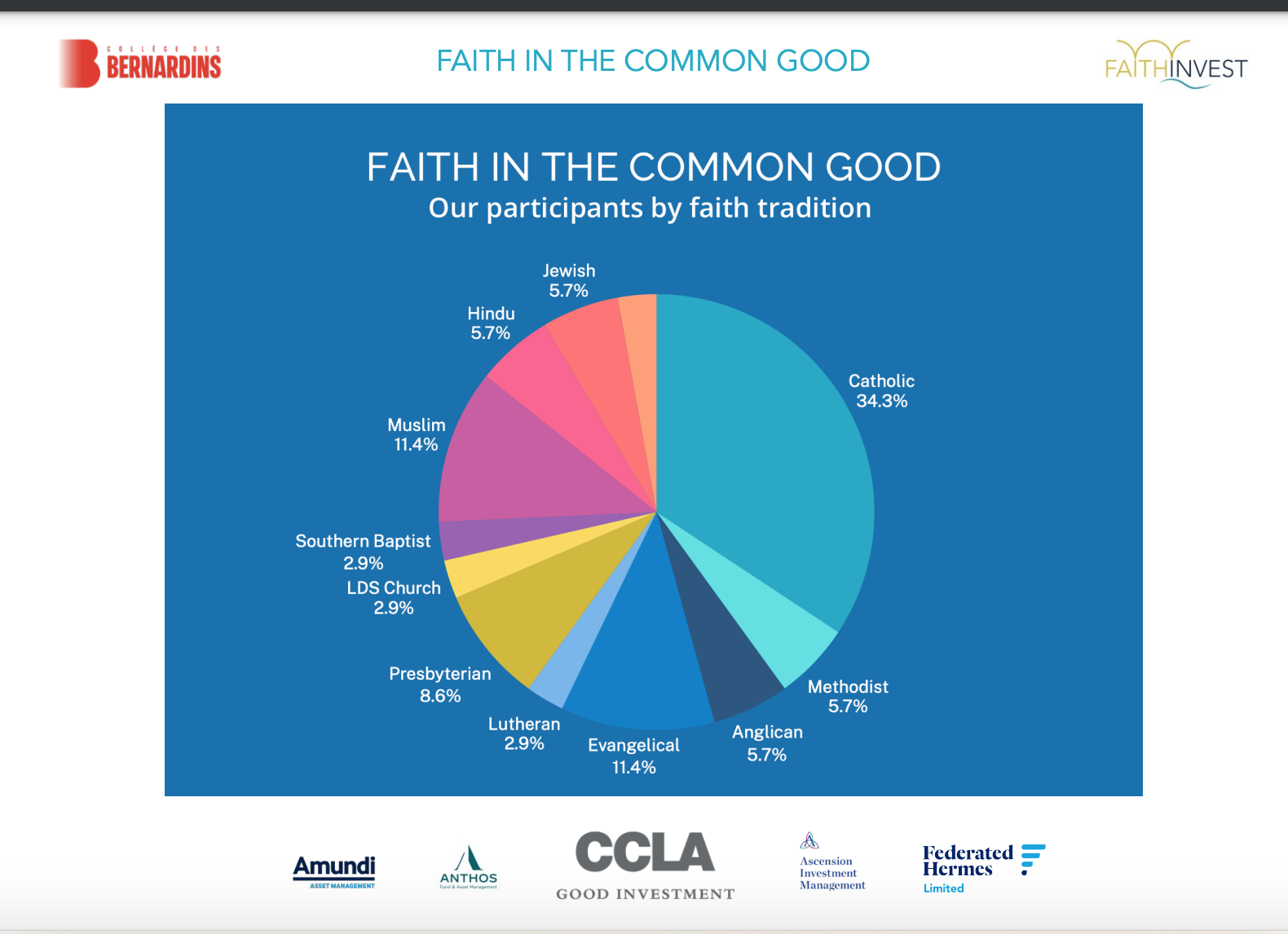 |
FAITH IN THE COMMON GOOD
The International Faith-Consistent Investment Forum
Paris, France, April 16-17, 2026
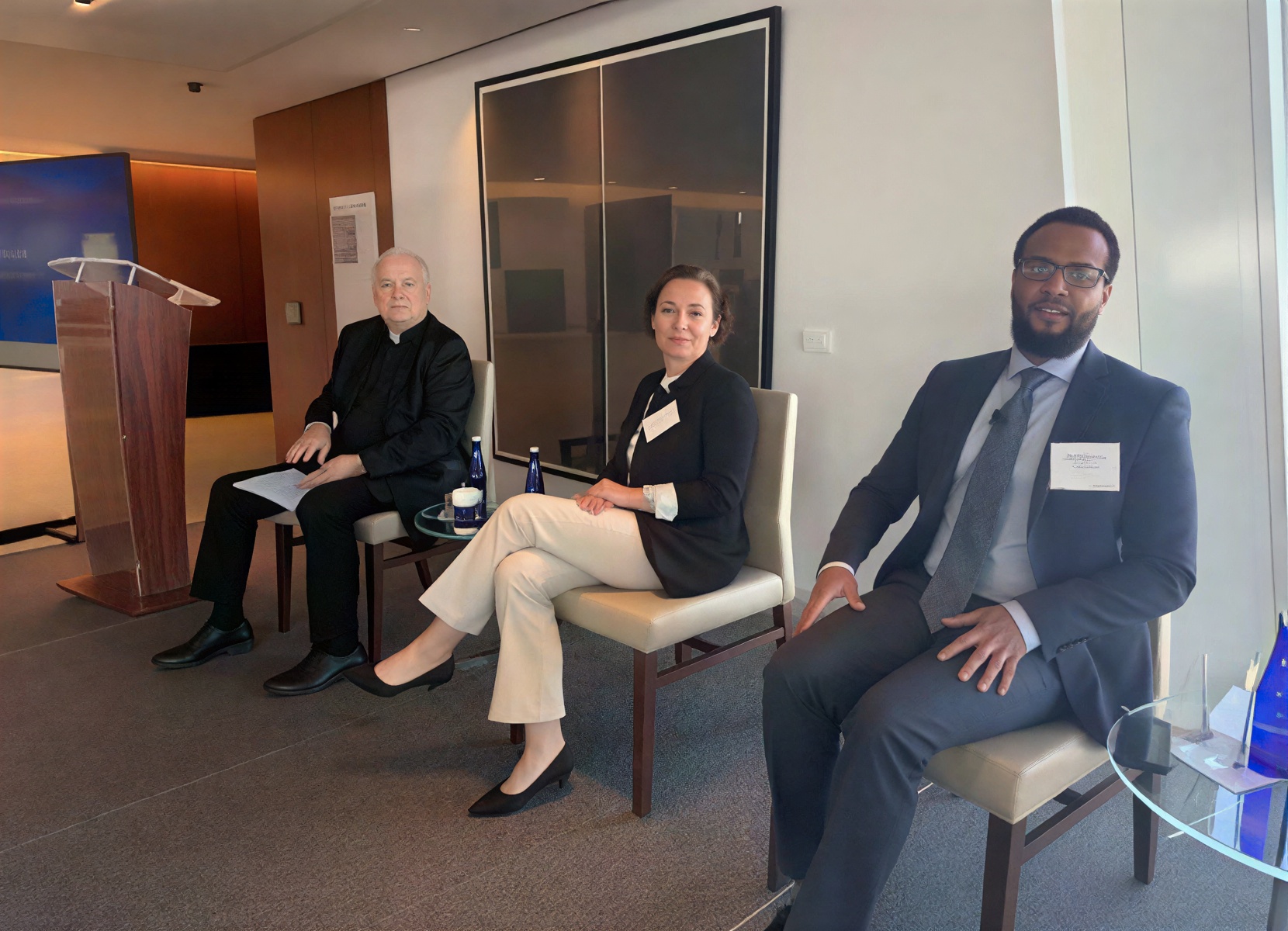
Fr. Séamus Finn, OMI Shares Insights on Ethical Investing at Merrill Lynch Forum April 13th, 2026
Church Leaders, Financial Experts Meet to Discuss Ways to Make Investments More Ethical & Effective November 12th, 2024
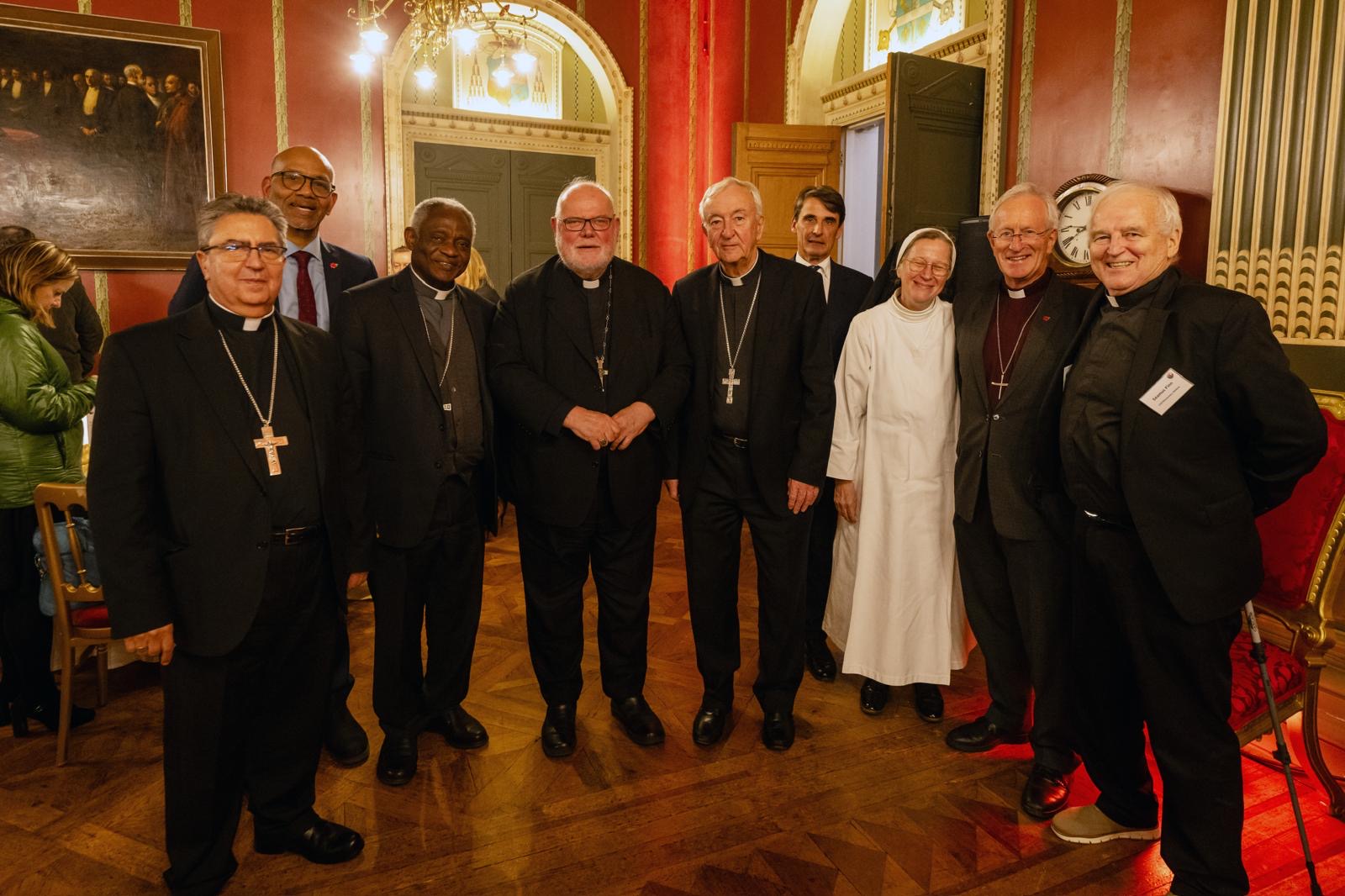
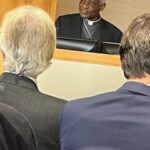
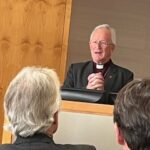
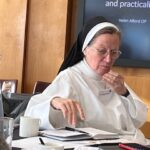
(Pictured L to R) Archbishop Miguel Maury Buendia, Apostolic Nuncio to the Court of St James: Alan Smith, First Church Estates Commissioner; Cardinal Peter Turkson, President of the Pontifical Academy of the Social Sciences; Cardinal Reinhold Marx, President of the Vatican Council for the Economy, Cardinal Vincent Nichols, Archbishop of Westminster; (Back row) Jean-Baptiste de Franssu, President of the Institute of the Works of Religion, commonly known as the Vatican Bank; Sr Helen Alford, OP, Chancellor of the Pontifical Academy of Social Sciences; Bishop David Urquhart, Advisor to the Archbishop of Canterbury; Rev. Séamus P. Finn OMI, Chief Faith Consistent Investment, OIP Trust
READ FULL Religious Media Center article: https://bit.ly/3CwXrRP
Two Days in Geneva with Fr. Séamus Finn, OMI February 2nd, 2017
“Pondering the stark contrast in perspectives, messaging, ambition, dreams, reading of history and the current state of the international relations in a place that is filled with history”
My two day visit to Geneva paralleled the two first full days of the Trump administration in Washington. The experience became like a retreat that at once brought me into contact with so many of the people, institutions and ideas that have formed and sustained the international multilateral system against the background of threats to repeal and disrupt many of the agreements and practices that are the threads that have been knit together into the tapestry of international cohesion and cooperation. It is like no other city, I think, in terms of the numbers of people and governments that have gathered here to negotiate peace, to sign agreements and treaties and to repair again the ruptures and wounds that have often divided tribes and counties and regions.
I participated in a multi stakeholder session on improving access to medicines for the treatment of neglected diseases at the Institute of International Development Studies that brought together a very diverse international set of researchers, pharmaceutical companies, governments, development agencies, NGOs and investors. They came together to evaluate the progress that has been made through this collaborative process, to discuss new concepts and initiatives that were being considered and to explore avenues whereby the success of these efforts might be enhanced through this open collaborative platform.
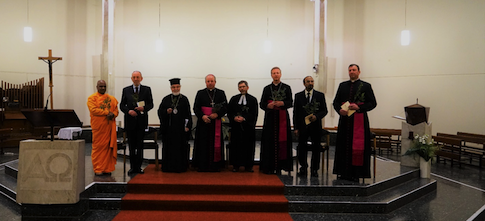
In the evening I gathered with many others at the church of St. Nicolas de Flüe for an interfaith prayer service to mark the World Day of Peace that was sponsored by the Permanent Observer of the Holy See to the United Nations in Geneva. This marked the 50th anniversary of the World Day of Peace that was initiated by Pope Paul VI in 1967 and focused this year on the theme of “Non Violence: A style of politics for peace”. One by one the representatives of different faith traditions, Islam, Jewish, Buddhist, Orthodox, Protestant and Catholic, offered their reflection on this year’s message from Pope Francis and prayers were offered in six different languages. Choirs from Africa and the Philippines as well as a Vietnamese style prayer procession added to the offering.
On the second day I made my way to the UN headquarters in Geneva to participate in an event that was sponsored by religious, secular and government organizations to recognize the contributions of a 15th century Dominican friar to the foundation of International Law and to the principles and process that would eventually lead to the establishment of the League of Nations and the United Nations. On the occasion of the conclusion of the celebration of the 800th anniversary of the Dominican friars, the Master general of the congregation as well as a number of UN officials and government representatives joined a large number of invitees in the Council Chamber that is now home to the conference on Disarmament and bear the name of Francisco de Vitoria, OP.
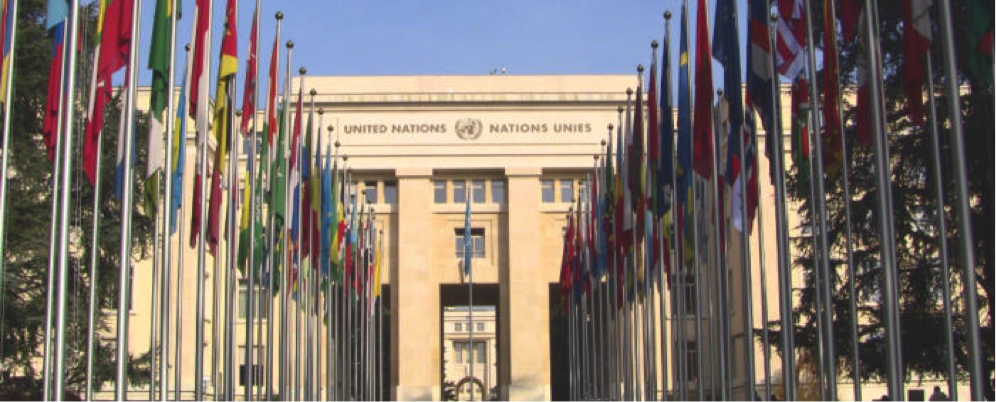
As I left the Council Chamber and headed toward the exit of the UN grounds I walked down the avenue and alongside the rows of country flags that were being occasionally disturbed by a gentle breeze on this chilly night. I found myself pondering both the discussions and yes compromises and the leaders that had contributed to the establishment of the League of Nations and then United Nations and the origins of the numerous international institutions and organizations that exist today. What was their dream, their founding vision and their guiding mission? What issues, problems and challenges were they hoping to address or solve? What inspiration, courage or dedication informed the numerous individuals from all over the world who contributed to this great work. As we surpass a world population of 7.5 billion and wrestle with the care of our fragile and beautiful common home, as Pope Francis reminded us, I wondered where and how we will find the wisdom and the architects to build the institutions and relationships that will be needed to hold our system together.
The inauguration of the Trump administration is offering in many ways a profound challenge to the vision of an international and global system that was rooted in the belief that a spirit of mutual trust and collaboration could be grounded in the principles of international law and governed by institutions that were based on those principles. Taking the country in some ways out of that web of international relationships and reducing one’s trust and commitment in the institutions that exist to promote harmony peacefully, resolve differences and provide a venue for public debate and cooperation appears reckless and lacking in foresight. At a minimum it is a significant divergence in direction and disruptive of the protocols that have been in place for decades.
At a time of significant disruption in our politics in the US and elsewhere we are left to look again to our foundations and to find direction and meaning and life in our vocation. The homilist at the local parish liturgy last Sunday carefully reminded us that in the Beatitudes we can find the Charter for living a Christian life and experience the grace filled presence of the Living God. May it be so!
